Anna Marshall talks with Isobel Campbell from Joulec
Sustainable Aviation Fuel, or SAF, is increasingly part of the conversation about reducing the impact of air travel. However, questions remain about how it works, what SAF certificates represent and whether organisations should consider investing while supply is still limited. Anna Marshall, Sustainability Lead for Orbit World Travel, spoke with SAF specialist and Joulec founder Isobel Campbell about the role SAF could play, what makes a purchase credible and how an organisation can get started.
Anna: What is SAF, and what role can it realistically play in reducing aviation emissions?
Isobel: Sustainable Aviation Fuel is a lower-carbon alternative to conventional fossil jet fuel. It can be produced from a range of sources, including used cooking oil, waste materials and, increasingly, synthetic pathways using renewable energy and captured carbon.
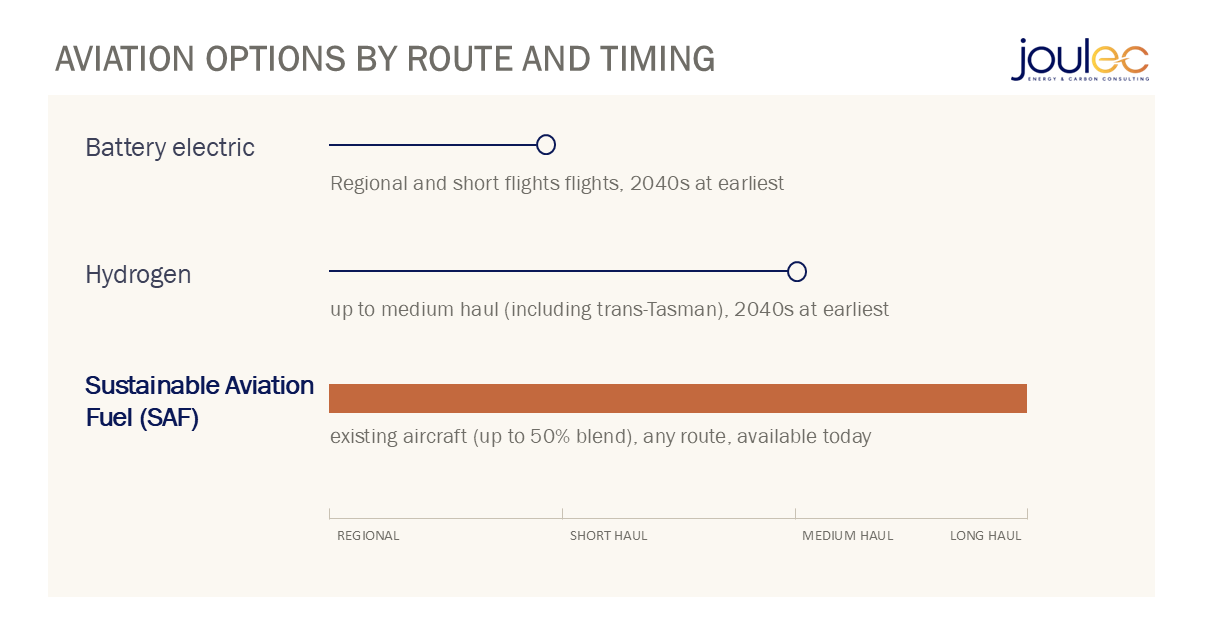
The key benefit is that SAF can be used within existing aircraft and fuel infrastructure. Other technologies, such as hydrogen and electric aircraft, are still developing and are expected to be more suitable initially for shorter routes. SAF is available today and can also be used for long-haul aviation, where there are fewer alternatives.
The emissions benefit depends on how the fuel is made. Waste- and residue-based SAF commonly provides lifecycle emissions reductions of around 80% compared with conventional jet fuel, while some emerging pathways may achieve greater reductions. It is important to remember that SAF is not a zero-emissions fuel: aircraft still produce emissions during flight, and the benefit is assessed across the fuel’s full lifecycle.
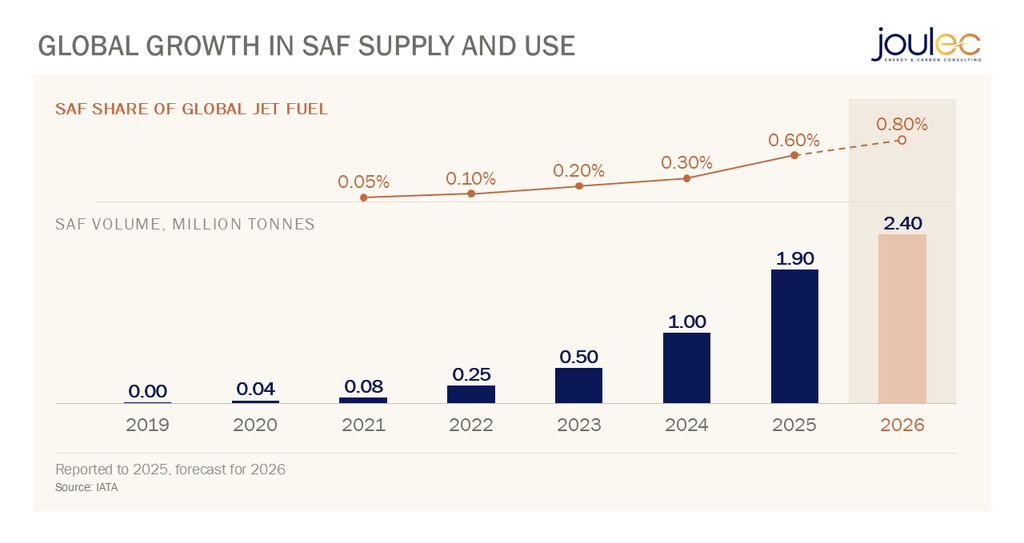
SAF is expected to be an important part of aviation’s transition, but production remains small. IATA estimates that SAF will represent approximately 0.8% of global aviation fuel use in 2026. The challenge is working out how to scale production significantly from here.
Anna: SAF is more expensive and supply is limited. Why should organisations consider it now?
Isobel: If SAF is going to become a meaningful aviation decarbonisation option, global production needs to increase—and corporate demand can help support that growth. SAF currently costs several times more than conventional jet fuel. When an organisation purchases SAF or a SAF certificate, its contribution helps cover part of that price difference. This can support airlines in purchasing more SAF while sending a demand signal to fuel producers and investors.
Starting with a modest pilot can also help an organisation build useful internal knowledge. It gives sustainability, finance, procurement and travel teams the opportunity to understand how SAF purchasing works, what documentation is required and how the organisation’s reporting framework or assurance provider will treat the purchase. This is particularly valuable while airline and certificate programmes are still developing. Early participation allows organisations to learn from a manageable investment before considering whether SAF should become a longer-term part of their travel strategy.
Anna: How do SAF certificates work if the fuel is not used on the aircraft an employee is travelling on??
Isobel: SAF certificates commonly use a system called book and claim. SAF is supplied into the aviation fuel system where it is practical to do so. The verified environmental attributes associated with that fuel can then be separated from the physical fuel, recorded and allocated to another buyer. This means an organisation does not need the SAF to be physically loaded onto the aircraft its employee is travelling on. Instead, it purchases the documented environmental benefit associated with SAF used elsewhere in the aviation system.
It is similar in principle to renewable energy certificates. A business purchasing renewable electricity does not necessarily receive those exact electrons at its building, but a tracking system records the generation and allocation of the renewable energy benefit. For SAF, credible book-and-claim systems need strong traceability, verification and retirement controls. The organisation should receive evidence showing the amount purchased, the associated lifecycle emissions reduction and confirmation that the environmental attributes have not also been allocated to another corporate buyer. How that benefit can be reflected in an organisation’s emissions reporting depends on the applicable framework and assurance requirements. It is therefore important to confirm the proposed treatment before making public claims.
Anna: What should an organisation look for to ensure a SAF purchase is credible?
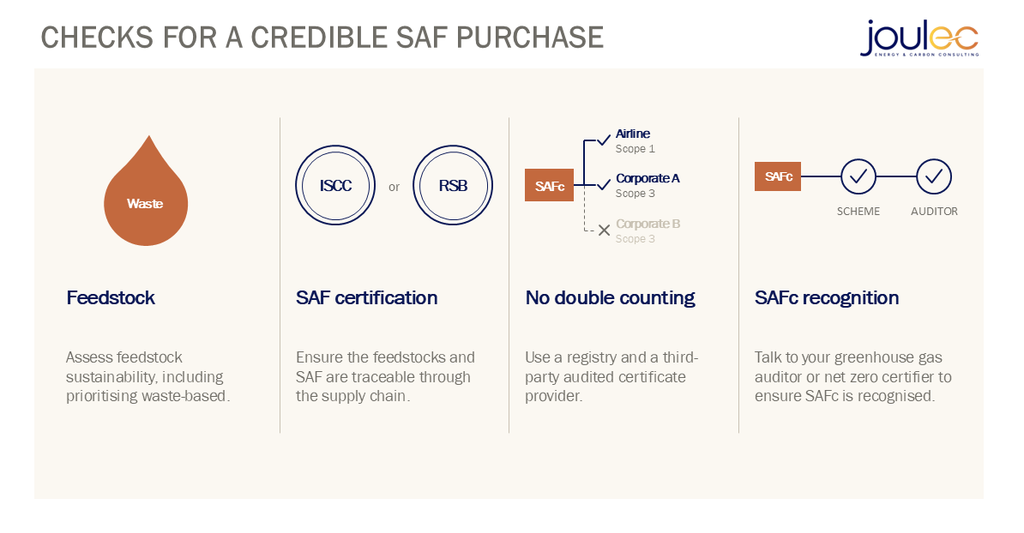
Isobel: Start by understanding what the SAF is made from. Waste-based feedstocks, such as used cooking oil and eligible residues, can offer strong lifecycle emissions performance with fewer land-use concerns than some purpose-grown crops. The fuel should be covered by a recognised sustainability certification scheme, such as RSB or ISCC, with clear information about the feedstock, production pathway and lifecycle emissions calculation.
For the certificate itself, look for:
Clear supply-chain traceability
Independent verification or third-party audit
A recognised registry or robust ledger system
A unique retirement statement
Controls to prevent double counting
Transparent calculation methods and assumptions
Organisations should also check whether their carbon certification programme, emissions reporting framework and assurance provider will recognise the proposed treatment. Having that conversation early helps avoid purchasing a certificate that does not provide the documentation needed for reporting or audit.
Anna: What is a practical first step for an organisation interested in SAF?
Isobel: Begin with your business travel footprint. Understand how much air travel contributes to your emissions and identify opportunities to reduce travel first. This might include combining several meetings into one trip, using virtual meetings where appropriate or reviewing frequently travelled routes. The next step is choosing a manageable SAF pilot. An organisation might:
Address a small percentage of annual air travel emissions
Focus on a particular route or business unit
Set a fixed annual SAF budget
Apply an internal carbon price or contribution per trip
Reinvest savings created through changes to its travel policy
There is no single model that will work for every organisation. The aim is to start with something measurable, affordable and supported by suitable evidence. For organisations approaching SAF certificates for the first time, the terminology and accounting considerations can feel complex. Joulec was established to help organisations work through those questions and make informed purchasing decisions. For more information, please get in touch with your Client Partnerships Manager.